Menu
Tree Planting Tips for Hoboken’s Waterfront Lots
Tree Planting Hoboken
Waterfront homes in Hoboken provide a singular combination of opportunities and challenges when it comes to tree planting. The proximity of the waterfront and the Hudson River results in salt exposure on the water side of many homes, as well as Sinatra Drive. Therefore, in order to plant trees successfully, one needs to have an awareness of the particular environmental factors that define the waterfront lifestyle of Hoboken’s residents.
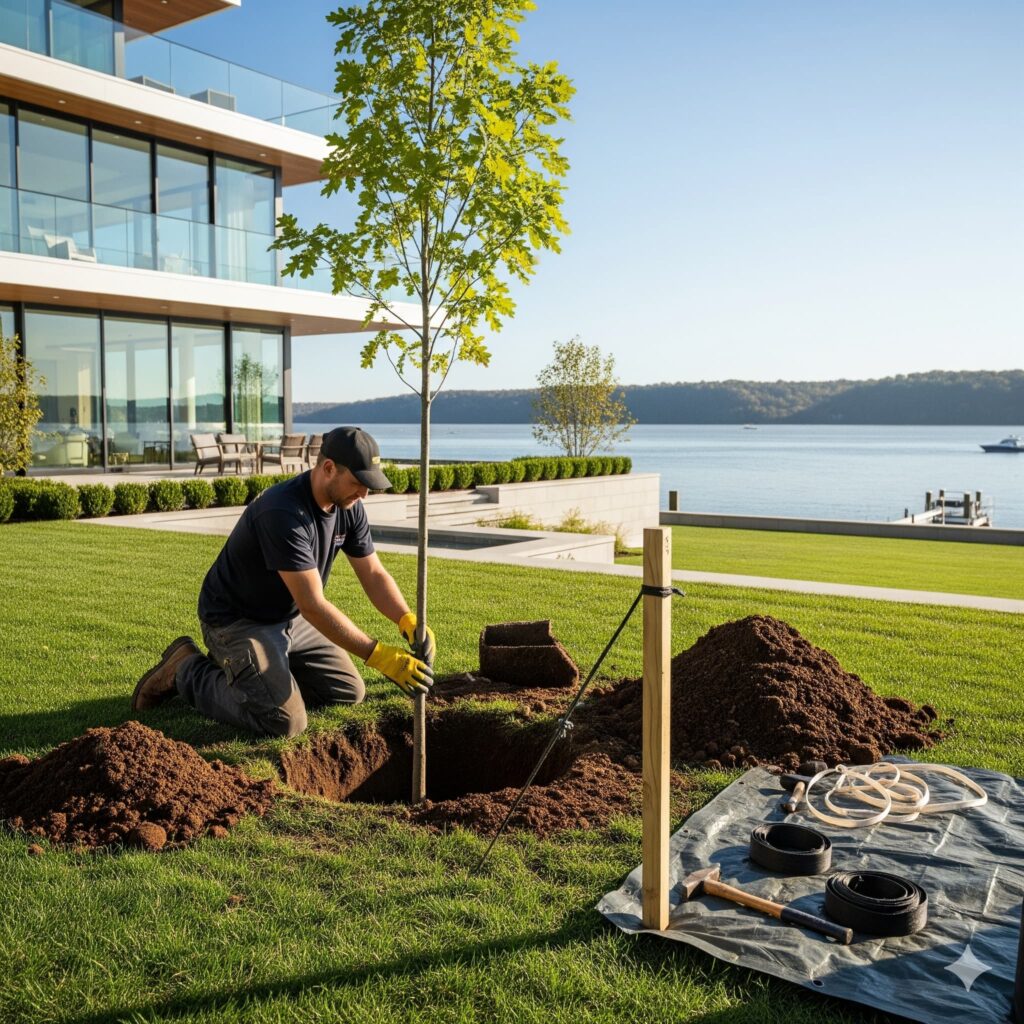
Waterfront Lots and Challenging Soils
Trees planted on waterfront lots in Hoboken often fail due to challenging soils. Most properties surrounding Pier A Park and the south waterfront are filled with compaction and construction debris from the area’s industrial past. Prior to selecting a species, it is essential to perform a soil test and consult with a professional tree planting service.
The Hoboken Shade Tree Commission has strict rules regarding the excavation of tree pits. They must be dug down to three feet and entirely free of compaction and construction debris. The commission also requires replacement with a quality sandy loam soil to allow for healthy tree establishment on the waterfront residential lots.
Salt Exposure
Any property located within walking distance of the Hudson River will have to contend with salt spray and, most likely, salt deposits from snowmelt and rain. Salt spray and airborne salt exposure can be detrimental to many types of trees, especially those located on the waterfront. To successfully plant trees in this area, you need to select species that have been tested for salt tolerance and can survive soil salinity as well as airborne salt spray.
One species that is effective in resisting salt spray is the London planetree (Platanus occidentalis). While London planetrees do very well on the south waterfront, there are residential properties where smaller species would be better suited to match site conditions and space limitations of the typical waterfront lot.
Approved Species List
All tree planting in Hoboken must utilize species from the Shade Tree Commission’s approved list. The Shade Tree Commission only approves species that have been tested to ensure they are suitable for the urban environment and the local climate. For waterfront properties, you should focus your selection on species that have performed well in the same type of salt-exposed environments as other residential neighborhoods in the city.
Shade Tree Commission Expertise
Homeowners who hire professional tree planting services can rely on the expertise of the Shade Tree Commission to help them avoid the costly mistakes made by selecting species that are not suited to Hoboken’s unique conditions. Some of the conditions include proximity to saltwater, the urban heat island effect, and the limited root space found in most waterfront developments.
Proper Planting Depth and Soil Preparation
In addition to proper planning and preparation, professional tree planting requires careful attention to root flare placement and soil preparation. The tree root flare must be set at the finished grade level of the soil, and any girdling roots must be removed before backfilling. This will help to prevent drainage issues and promote the health of the tree in waterfront environments.
Soil for waterfront planting needs to be able to drain properly and provide enough oxygen to the roots. An air-entrained soil that is similar to what was used to build the South Waterfront Promenade has been effective in providing the necessary drainage and root oxygenation for newly planted trees. Air-entrained soils typically consist of an expanded shale component that allows for healthier root system establishment in challenging waterfront conditions near residential properties.
Irrigation and Ongoing Care
Young trees require consistent watering to establish themselves properly, especially in the challenging conditions of waterfront planting. Salt exposure can exacerbate water stress. It is recommended to provide 10 gallons of water per caliper inch of trunk diameter per week for newly planted trees.
Consistent Moisture Delivery
To provide consistent moisture delivery for young trees, Gator Bag-style irrigation systems can be installed. These systems are especially beneficial for waterfront lots where wind exposure and salt exposure create unreliable water access for establishing young trees.
Wind Protection and Staking
Wind is much stronger in waterfront properties compared to interior lots. Proper staking of newly planted trees is essential for establishing successful roots. Wooden stakes with Arborties provide the best protection for young trees without limiting the natural trunk movement required for healthy root development. Guy wires with rubber hoses are unacceptable by Shade Tree Commission standards, as they can damage bark and restrict proper trunk development.
Timing and Seasonal Considerations
Planting trees in the fall typically provides ideal conditions for establishing young trees in waterfront lots, as the trees have time to develop their root system in cooler weather before having to endure the heat of summer and salt exposure. Spring planting can work, but it requires more intense irrigation through the hot summer months.
Avoid Winter Planting
It is generally not recommended to plant trees in the winter months, especially if the tree is going to be exposed to high levels of salt spray during nor’easters. Planting trees at the right time will give them a chance to establish themselves before being exposed to harsh environmental stresses.
Tree Pit Design and Protection
Large tree pits are beneficial to waterfront planting as they provide the young trees with the room needed for root development. The Shade Tree Commission recommends tree pits that range from 15-50 sq. ft., and the size of the pit will depend on how much environmental stress the tree will face.
Protecting Young Trees
The Shade Tree Commission approves three-sided tree pit guards that allow for proper water infiltration while protecting young trees. Guards should not limit tree growth and should not create tripping hazards on waterfront walkways and residential sidewalks.
Mulching and Maintenance
Applying hardwood mulch to young trees can provide many benefits, such as retaining moisture and moderating soil temperatures. Mulch should be applied no deeper than three inches and kept at least three inches away from the trunk of the tree. Regular maintenance of mulch is also beneficial in helping young trees establish themselves and compete less with weeds that can cause stress to young plants.
Residential Property Owners
Residential property owners will need to obtain a permit from the Shade Tree Commission and possibly a road-opening permit from the City Engineer if planting trees in public rights-of-way. Before starting any tree planting project near waterfront streets, check with your city to see what permits are required.
A professional tree planting company will take care of all the paperwork involved in obtaining permits for tree planting projects. Hiring a professional tree planting service will save you time and money and ensure that all local regulations for planting trees in residential areas are followed.
Factors for Long-Term Success
Long-term success of waterfront tree planting depends on the owner taking responsibility for providing proper establishment care and ongoing maintenance. When a homeowner hires a professional to plant and maintain their trees, using the recommendations of the Shade Tree Commission, their trees will grow into valuable additions to their waterfront residential property.
Contact Hoboken Tree Service Pros for Professional Tree Planting Services
For professional tree planting services that take advantage of the unique regulations in Hoboken and plant trees that will thrive in salt-exposed residential waterfront conditions in Hudson County communities, call Hoboken Tree Service Pros. Our certified arborists know the Shade Tree Commission regulations and specialize in selecting and planting trees that thrive in salt-exposed residential waterfronts in Hoboken and surrounding communities.
LATEST POSTS