Menu
When to Call a Pro for Tree Disease Treatment in Hoboken
Tree Disease Treatment Hoboken
Determining when a tree in Hoboken needs expert tree disease treatment may be the difference between preserving your property and having to remove it (which is expensive). The mature trees along Washington Square Park, as well as around Stevens Institute, are all part of the larger canopy, which gives Hoboken its identity; treating them promptly will help protect each tree individually as well as the entire urban forest canopy that defines our City.
Early Warning Signs of Fungal/Bacterial Diseases in Trees That Require a Professional Assessment
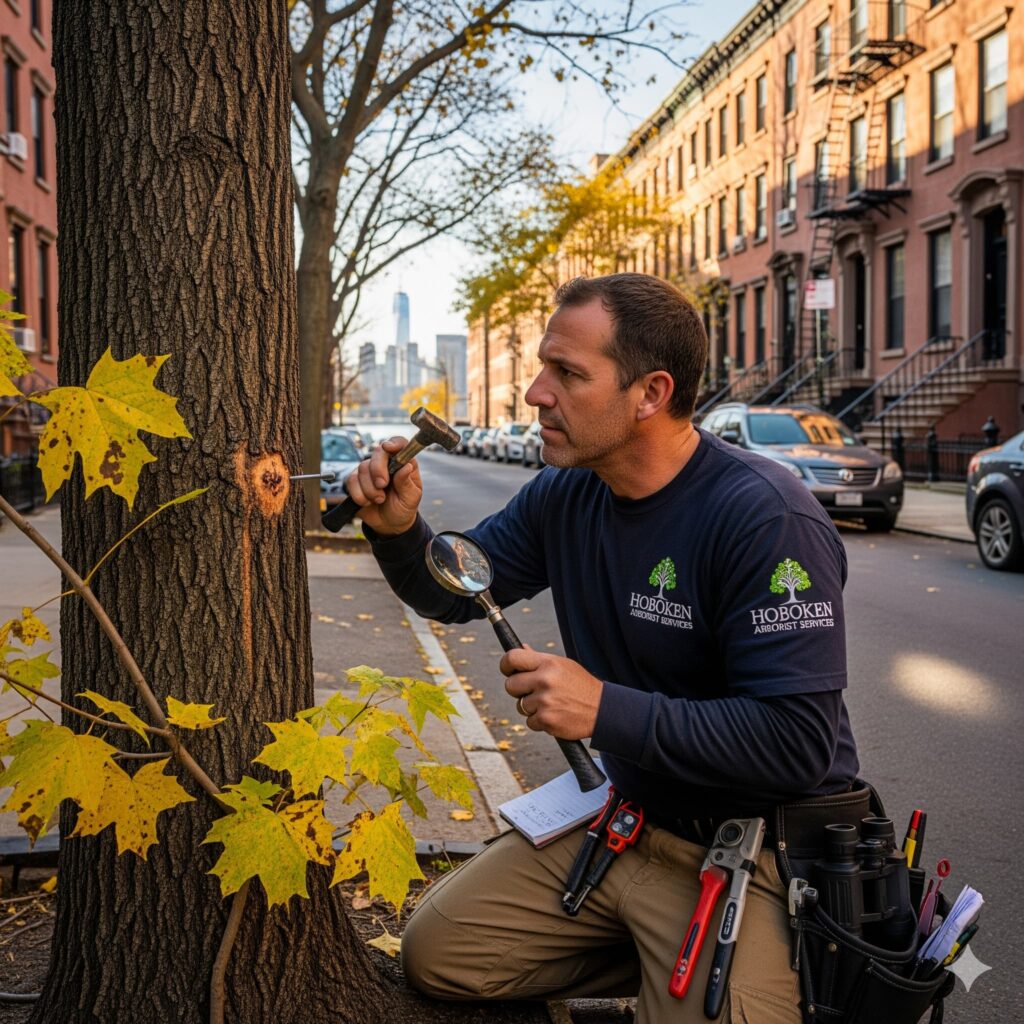
Trees with leaf discoloration that occur outside of what is normally expected (for example, yellowing, spotting, or blotting) during the growing season usually signal that a fungal or bacterial disease has developed. Leaf discoloration is one of the first signs of a possible problem with a tree that will become worse if left untreated and addressed by a professional for treatment of tree disease.
Homeowners throughout Hoboken should be aware of trees that show wilted foliage in a portion of the crown because this is a sign of a vascular disease such as Dutch elm disease or Verticillium wilt. Vascular diseases are systemic and require professional diagnosis and treatment as soon as possible to avoid tree death and further spread of the disease to surrounding trees.
Abnormalities of Bark and Growth
Any cankers, galls, or abnormal growths on a tree trunk or branch represent serious disease and require professional treatment of tree disease. Canker diseases are often fungal in nature and can cause damage to a tree’s structure and potentially lead to a hazard in densely populated residential areas in Hoboken.
Unusual amounts of sap flow from the trunk of a tree that occur at times other than during the typical spring months indicate there is likely an internal problem that requires a professional to diagnose. A licensed arborist can recognize and distinguish between a physiological response and a pathological condition that warrants a specific treatment protocol.
Die Back of Branches and Crown Thinning
When a rapid branch loss or a progressive thinning of the crown of a tree occurs, it indicates there is a severe issue that needs to be treated by a professional immediately. This type of loss of a branch or decline of the crown of a tree is often the result of a root disease, vascular disease, or environmental stress that develops over time without the proper intervention.
A professional arborist can determine whether or not the loss of a branch is due to a disease process or the need for routine pruning. If a homeowner allows the die-back of a branch to go unaddressed, the disease process can continue to affect the rest of the tree and ultimately lead to the total loss of the tree. Thus, a professional assessment of the tree’s health before treatment can help to ensure that only those branches that need to be removed are taken off and that the remaining branches are preserved.
Disease-Specific Susceptibilities of Certain Species of Trees
Many different types of trees grow in the area of Hoboken that have specific disease vulnerabilities. For example, certain species of oak trees are susceptible to oak wilt and thus require a professional to monitor their health and treat them accordingly during the high-risk times of year when the beetles that carry the disease are most active.
American elms are also susceptible to Dutch elm disease and therefore require a professional to supervise them so they do not get infected with the disease. Ash trees are susceptible to the emerald ash borer, which causes significant damage to the tree and requires a professional to develop and implement a treatment plan to kill the insect and stop its destruction of the tree.
The above-mentioned specific vulnerabilities of certain tree species to certain diseases illustrate why it is so important to consult with a professional to maintain the health of trees within a community such as Hoboken.
Stresses Caused by Environmental Conditions in Urban Areas
Hoboken’s urban environment creates specific stresses that predispose trees to problems caused by diseases that require the assistance of a professional. The urban environment creates stressful conditions for trees, including soil compaction, poor air quality, lack of root space, and the heat island effect, which weaken the trees’ defense systems and make the trees more susceptible to infection by a variety of pathogens.
A professional who specializes in the treatment of diseased trees will not only address the symptom(s) of the disease but will also address the environmental factor(s) that contributed to the weakening of the tree’s defense system. The professional will develop a comprehensive management plan that will enhance the growing conditions for the tree while treating the disease that has affected the tree.
Expertise in Diagnostic and Laboratory Testing
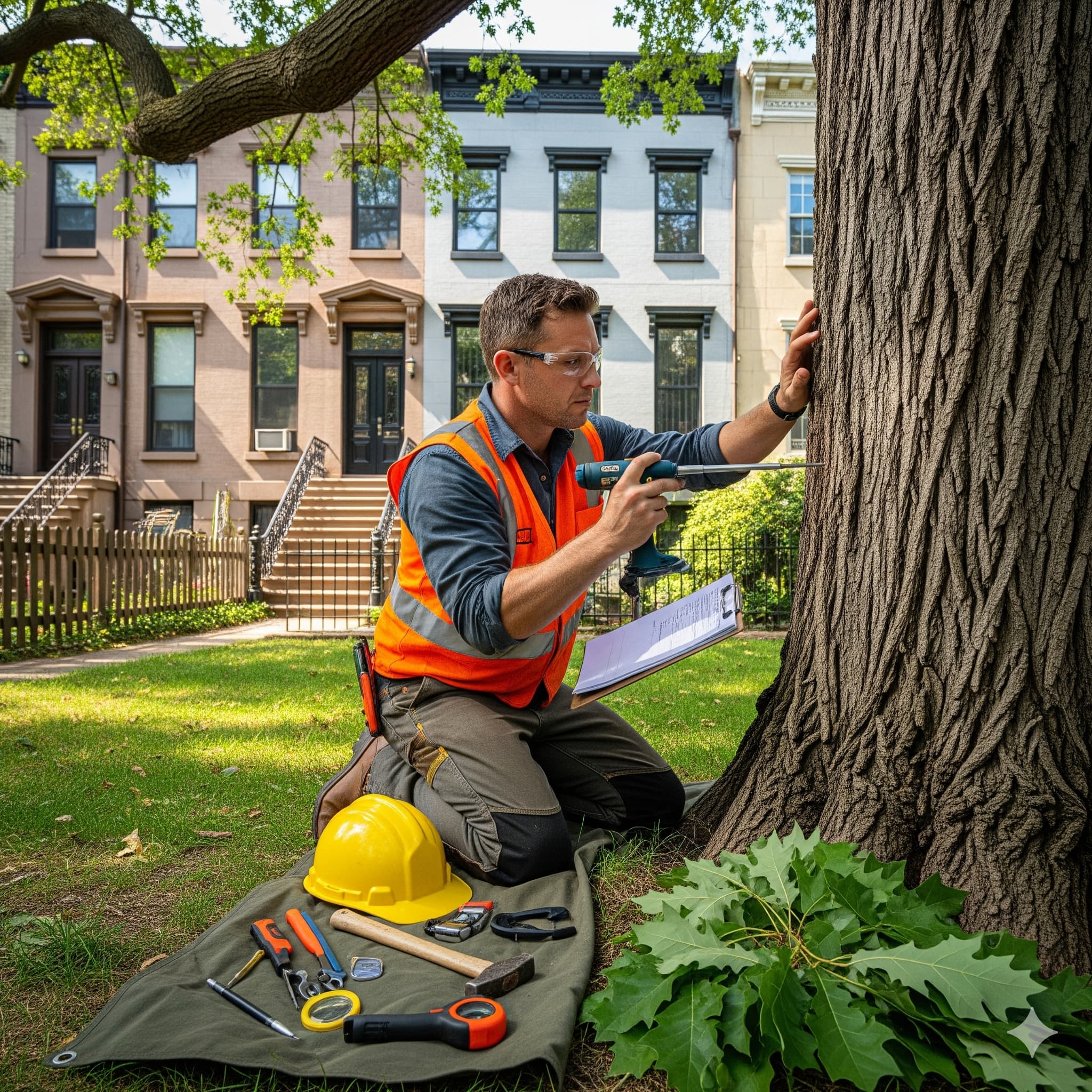
Properly diagnosing tree disease requires the expertise of a trained professional that extends beyond observing the visible symptoms of the disease. Many tree diseases present similar symptoms,s and some diseases mimic others, which means a proper identification is necessary for effective treatment and for preventing unnecessary and/or hazardous treatments to the tree.
When a professional tree disease treatment service determines that laboratory testing is necessary to confirm the diagnosis and identify the specific pathogen responsible for the disease, the service will conduct the necessary tests to confirm the presence of the disease and identify the specific pathogen. Conducting scientific testing to confirm the diagnosis and identify the specific pathogen will allow the professional to develop a targeted treatment plan that addresses the specific disease causing the symptoms.
Timing of Critical Treatment Applications
In many cases, tree diseases require treatment at specific times relative to the life cycle of the pathogen or the phenological stage of the tree. A professional providing tree disease treatment services understands the optimal times for applying fungicides, fertilizers, etc., to maximize the effectiveness of the treatment while minimizing the negative impacts on the environment.
If a homeowner attempts to treat his/her own tree(s), he/she may not know the critical timing of application of the treatment product, or he/she may choose a treatment product that is not specifically designed to combat the disease that is afflicting the tree. A professional providing tree disease treatment will ensure that the treatment is applied at the correct time and in the correct manner to give the tree the best chance of successfully recovering from the disease.
Safety Considerations and Liability
Treatment of tree diseases often involves the application of specialized chemical products and equipment that require the services of a trained and licensed professional to ensure safety and efficacy. Professionals providing tree disease treatment services are trained and licensed to handle these products in a safe and environmentally friendly manner, and to minimize the risk to human health.
Additionally, when a homeowner contracts a professional for tree disease treatment, the homeowner is protected by the professional’s insurance coverage and professional liability protection from potential claims related to the treatment activities. This protection is essential when treating valuable trees and when the treatment activities could potentially damage property.
Comprehensive Integrated Management Plans
Effectively treating tree disease requires developing and implementing integrated management plans that address the multiple factors contributing to the overall health of the tree. A professional providing tree disease treatment services will develop a comprehensive plan that incorporates treatment of the disease(s) affecting the tree, along with cultural practices, soil improvements, and environmental modifications to promote long-term tree health.
Because of the multiple interacting stresses that contribute to the overall health of a tree in the urban environment of Hoboken, an integrated management plan is the most effective way to ensure that all of the contributing factors to the disease(s) are addressed. An experienced professional will take the time to thoroughly evaluate the tree and develop a comprehensive plan that meets the specific needs of the tree and ensures the success of the treatment plan.
Ongoing Monitoring and Follow-up Evaluations
The success of a tree disease treatment program requires ongoing monitoring to assess the effectiveness of the treatment and to identify any potential recurrences of disease or development of new problems. A professional providing tree disease treatment services will provide regular follow-up evaluations to monitor the progress of the treatment and to modify the management plan as necessary.
Regular follow-up evaluations are essential to ensure the continued health of the tree over time and to prevent future problems that could potentially affect the tree and require expensive treatments or even tree removal. By catching potential problems early, the cost of treatment will be significantly reduced, and the likelihood of the tree needing to be removed will be minimized.
Comparison of Cost vs. Benefit of Professional Treatment
Although hiring a professional to treat a diseased tree will incur a cost, it is generally less expensive than removing and replacing a mature tree and restoring the landscape after the removal of the tree. In addition to the cost savings of hiring a professional to treat a diseased tree, a professional will work to protect the remaining landscape features and prevent the potential spread of the disease to other trees.
Generally, the cost of hiring a professional to treat a diseased tree is much less than the cost of replacing a mature tree and restoring the landscape after the removal of the tree. The professional will protect the remaining landscape features and prevent the potential spread of the disease to other trees. Hiring a professional to treat a diseased tree generally results in a lower cost for the homeowner than if the homeowner were to remove and replace the tree themselves.
How to Choose a Suitable Professional
Before a homeowner hires a professional to treat a diseased tree, the homeowner should ensure that the professional is properly licensed, insured, and has received the necessary education/training in plant pathology and disease management. The International Society of Arboriculture (ISA) certifies arborists who specialize in caring for and managing trees and in treating diseased trees.
The State of New Jersey requires professionals to obtain licensure before they can legally offer their services for the treatment of diseased trees. The State of New Jersey requires professionals to obtain licensure to protect consumers from individuals who claim to be experts in the field of tree care but have not received the necessary education and/or training.
Homeowners should verify the qualifications of any professional before allowing them to perform any treatments on their trees. Homeowners should request references from the professional and check the references to ensure that the professional is capable of performing the treatments required.
For the best professional tree disease treatment in Hoboken that utilizes the most current methods and materials available, please contact Hoboken Tree Service Pros. We have ISA-certified arborists who can provide comprehensive disease management services for your valuable trees in Hudson County’s difficult environmental conditions.
LATEST POSTS