
Menu
Emergency Tree Service Checklist for NJ Weather Emergencies
Emergency Tree Service Hoboken
New Jersey is often exposed to various types of weather, which can cause emergency tree services to be required immediately. Whether it is the storms that occur along the Jersey Shore from Atlantic hurricanes or the severe thunderstorms that affect many of the inland towns, such as Hoboken, homeowners will have better responses to tree-related hazards by preparing for their emergency response with an appropriate emergency checklist when severe weather occurs.
Pre-Storm Preparation Checklist
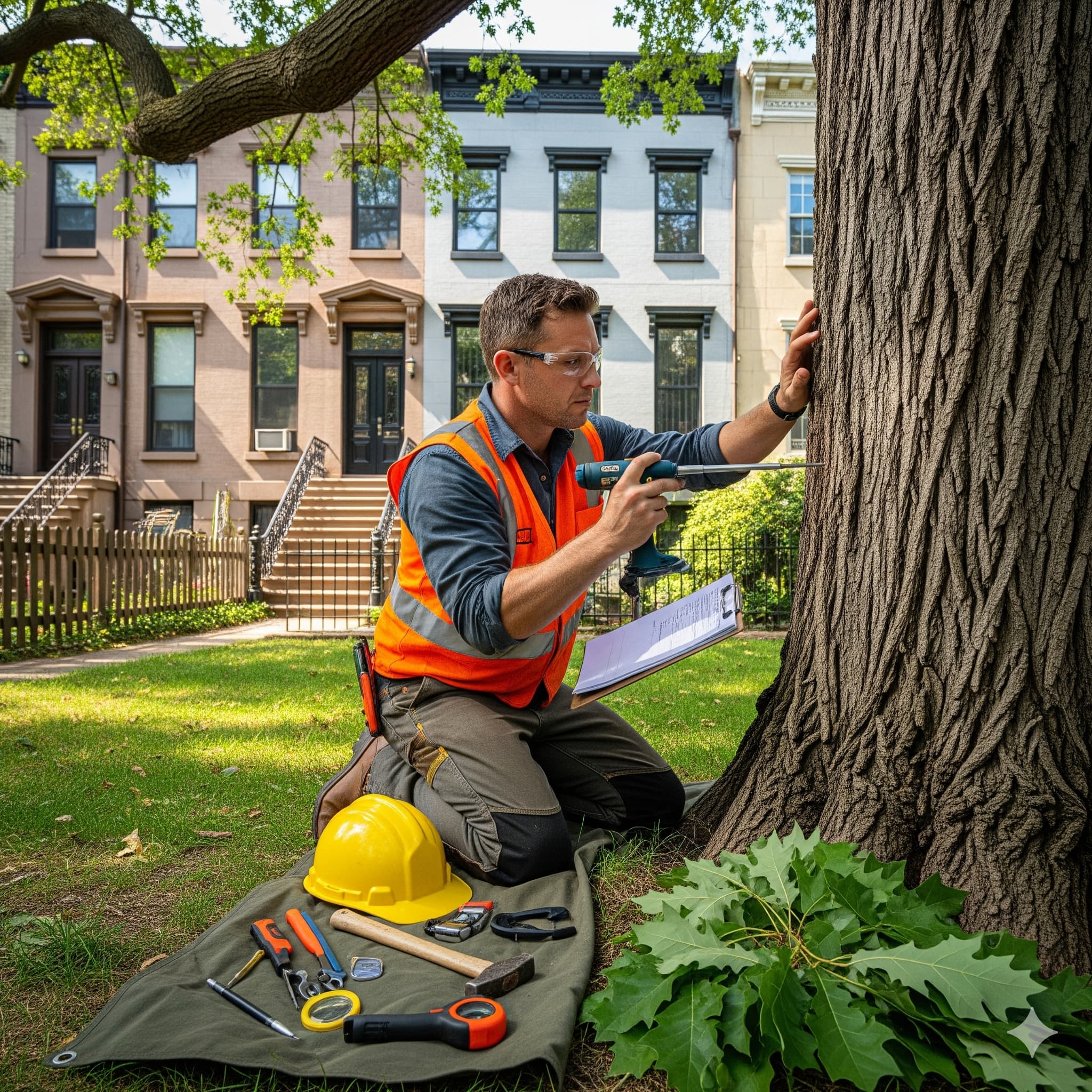
Preparation is the key to success when it comes to emergency tree service. Before a severe weather event hits New Jersey, residents need to be aware of potential hazards on their property, specifically trees with dead limbs, signs of illness, and structural weakness that could lead to failure during a storm.
Take photos of the condition of each tree so you have documentation for insurance purposes. Also, document how close any trees are to your house and/or any power lines. Find a few licensed emergency tree service contractors that you know you can call on in advance of an emergency; response time will go way up when everyone in an area has storm damage at the same time.
Weather Alerts and Monitoring
Use National Oceanic and Atmospheric Administration (NOAA) weather radio and local emergency management communications to stay informed of severe weather events during New Jersey’s hurricane season, which runs from June 1 to November 30. Keep tabs on the weather while there are storms that produce high winds, thunderstorms, or freezing rain, which could cause damage to your home or property and/or utilities in your area.
Sign up for Wireless Emergency Alerts (WEAs), which allow you to get timely notifications directly to your phone regarding severe weather events in your immediate area. WEAs also alert you to severe weather events that require emergency tree service.
Initial Inspection
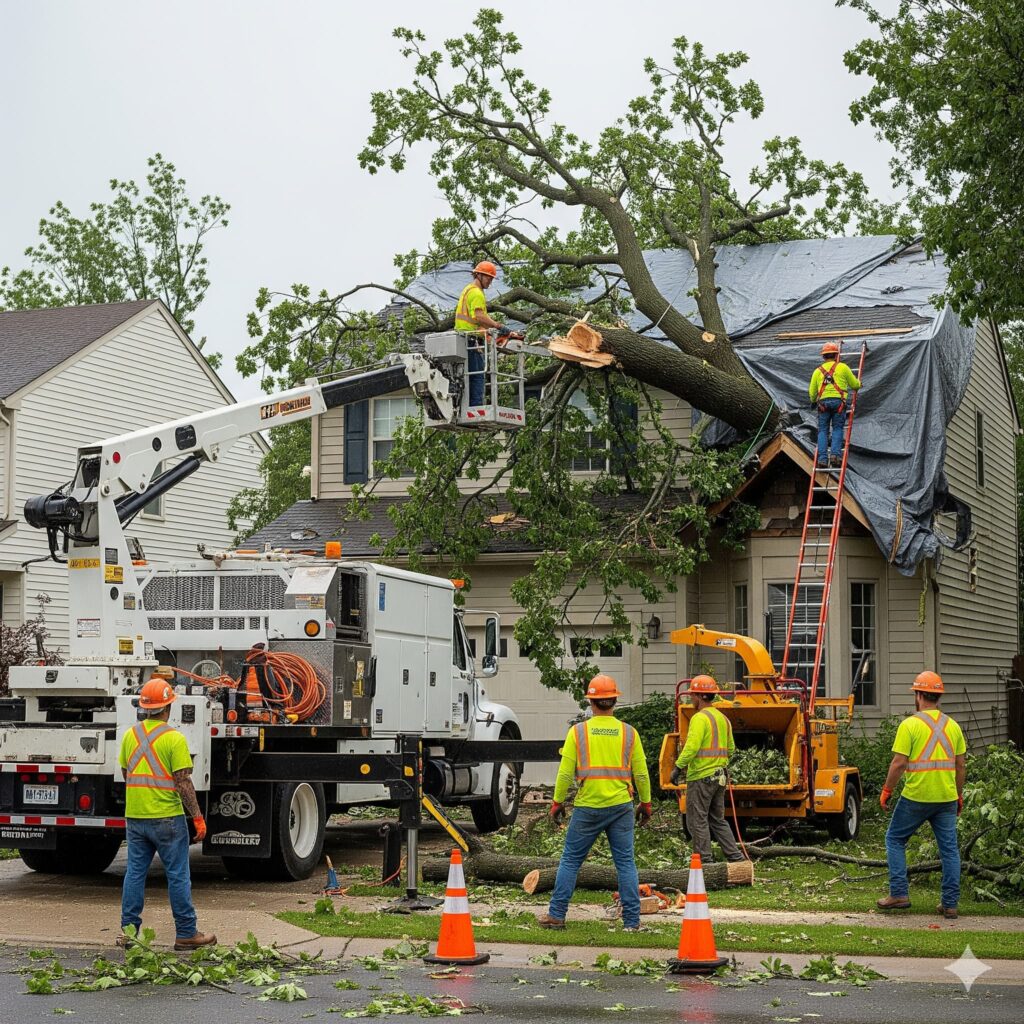
Before heading outside during a severe weather event, do an initial inspection of your property from a safe distance. Be sure to look for any trees that may have fallen onto your home or any other structure, downed power lines, or blocked access to driveways or sidewalks.
Do not attempt to move any downed power lines or any tree branches that may be touching a live wire. Call your utility provider to report the hazard, and then call a professional emergency tree service to come out and make the situation safe for them to perform their services.
Contact List
Create a list of professional emergency tree service providers that you can use during extreme weather events that impact New Jersey. Your primary contact should be a licensed and insured provider with knowledge of local rules and regulations related to emergency tree work.
Be cautious of anyone going door-to-door offering emergency tree services immediately following a storm. These individuals often do not have the proper licenses or insurance to operate. Licensed emergency tree service providers usually show up in marked trucks with the proper equipment and provide a detailed written estimate before starting any work.
Documentation for Insurance Claims
Take photos of all tree damage before hiring an emergency tree service provider to begin the cleanup process. The photos should show the damage to the trees and how the damage affected any nearby structures, vehicles, or other property enhancements.
Ask for a written estimate from your emergency tree service provider that outlines exactly what services you will receive (tree removal, stump grinding, etc.), materials used, equipment needed, and cleanup procedures. This documentation will help support your insurance claim for any storm-related damage to your trees.
Safety First When Trees Become Hazards
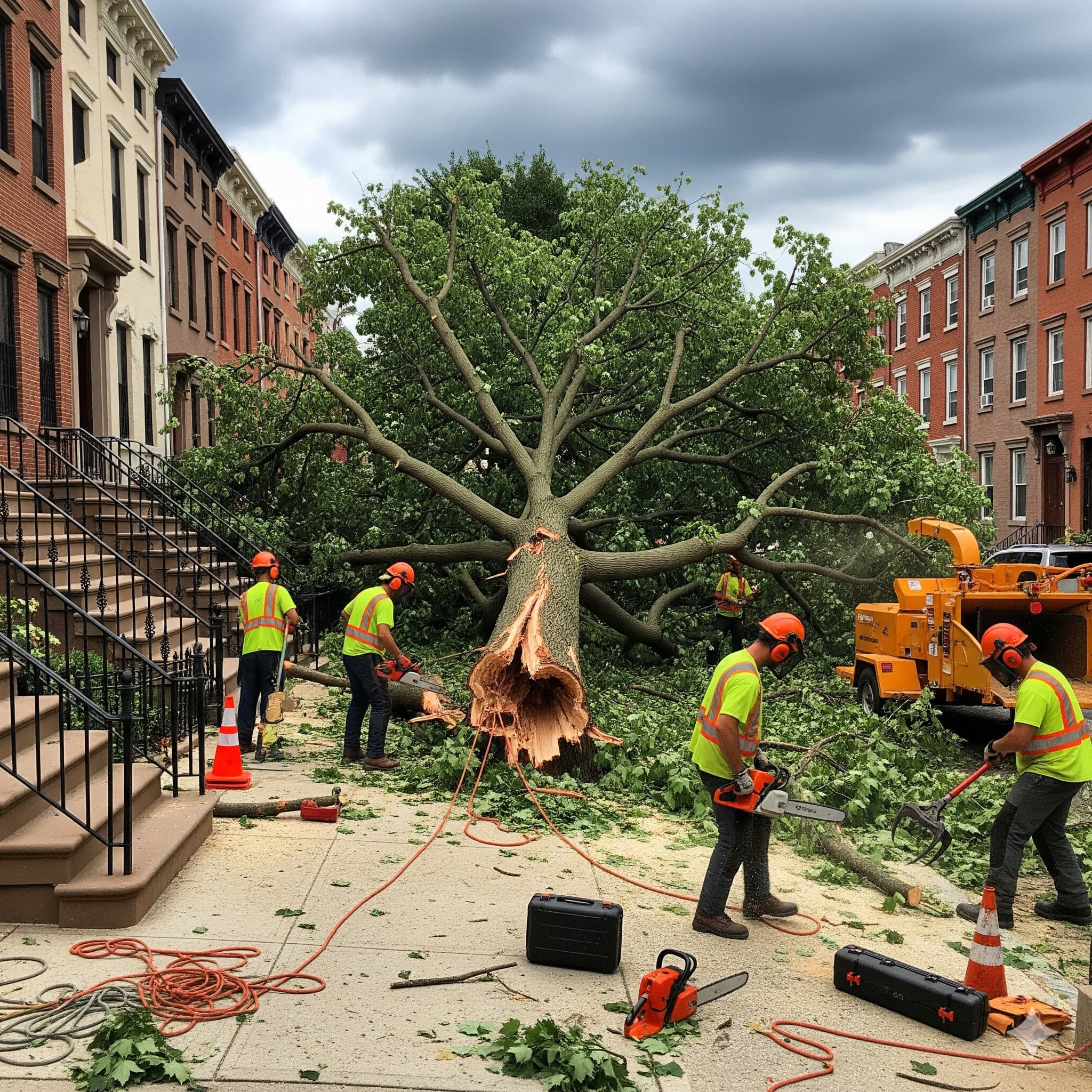
When severe weather creates hazardous tree conditions near homes, prioritize life safety above property preservation. If a tree is threatening a home with people inside, immediately evacuate and contact emergency services before arranging for emergency tree service.
Keep a safe distance away from any trees that have been damaged, since broken roots and fractured branches can break apart unexpectedly, even after the storm has passed. Professional emergency tree service providers have the right equipment and training to assess the stability of the trees and safely remove any hazards.
Coordinating with Utilities
Coordinate with utility companies whenever trees are damaging power lines, natural gas lines, or telecommunications infrastructure that serves your home. In many cases, utility company approval is needed before emergency tree service providers can safely access the damaged trees.
If emergency tree service work may involve digging or excavating near underground utility lines, ask for utility markings through New Jersey 811. This will prevent further hazards and ensure compliance with state regulations governing excavation and tree removal activities.
Verifying Emergency Tree Service Providers
Before allowing any emergency tree service provider to begin work on your residential property, verify that they hold the proper licenses and insurance to complete the work. In New Jersey, specific licensure is required for professionals performing tree work, and homeowners should request proof of licensure before accepting emergency services.
Also, confirm that your emergency tree service provider understands the local regulations for storm damage cleanup and debris removal. A reputable emergency tree service provider will understand the local regulations and coordinate with local government officials to meet any required permits and/or municipal ordinances during the emergency response operation.
Cleanup and Restoration Plans
Following the completion of emergency tree service operations due to a major weather event in your community, plan for comprehensive cleanup and restoration of your property. This includes arranging for debris removal, soil restoration, and temporary repairs to protect your property from further damage from additional weather.
Many professional emergency tree service providers include debris cleanup in their service package; however, homeowners should clarify the cleanup procedure and estimated timeframe for completion prior to allowing the work to commence, especially during peak demand times following a regional storm event.
Assessing Property Damage After the Storm
After completing the emergency tree service work, conduct a thorough assessment of your property to determine if any remaining tree hazards exist that would require your attention. Severe weather events can create weakened trees that do not immediately fall but still present a delayed hazard requiring a professional evaluation and treatment.
Schedule a follow-up inspection with a certified arborist to evaluate the overall health and structural integrity of the remaining trees on your property following the severe weather event. Evaluating the health of your trees and identifying those that may be in danger of failing in a future storm can help you avoid future emergency services.
Processing Insurance Claims
File your insurance claim as soon as possible following emergency tree service, along with all required documentation and professional estimates for the damages that were covered under your policy. Many homeowner’s insurance policies cover emergency tree removal when a tree causes damage to a structure or blocks a necessary access route to your property.
Keep detailed records of all costs associated with your emergency tree service, including receipts, photographs, and written communication with your service provider(s). These records will support the processing of your insurance claim and help establish any eligible reimbursement for storm-related tree damage repairs.
Planning for Long-Term Recovery
Based on your experience with emergency tree services, develop a long-term recovery plan that addresses landscaping restoration and future storm preparedness. Consider replacing trees that failed during the storm with new trees that are suitable for New Jersey’s climate and storm frequency.
Also consider hiring a professional to provide a tree health assessment and an ongoing maintenance program to reduce the likelihood of needing emergency tree services again due to unhealthy trees.
When Seeking Dependable Emergency Tree Service for Weather Emergencies in New Jersey
Contact Hoboken Tree Service Pros. Our certified staff members are available 24 hours a day, 7 days a week for emergency responses to severe weather damage and have the necessary licenses and insurance to serve the Hudson County area and surrounding communities across the state.
LATEST POSTS